Why Bathtub Drains Back Up
When your bathtub starts to fill up instead of draining, it feels like a small domestic emergency. Standing water, unpleasant odors, and the slow trickle of water after a shower are signs that something is blocking the path beneath the drain. Understanding why bathtub drains back up gives you options that range from quick fixes you can do today to longer term changes that prevent repeats.
This article breaks down the most common causes, what to try at home, when a quick clean will do, and when to reach out to a professional. You will find practical tips, examples of common scenarios, and safe methods to clear a clog while protecting your plumbing system.
Common reasons bathtub drains back up
Several common factors explain why water slows or reverses course in a bathtub. Each factor requires a different approach to resolve. Knowing the likely cause helps you pick the right tool or decide if a pro is needed.
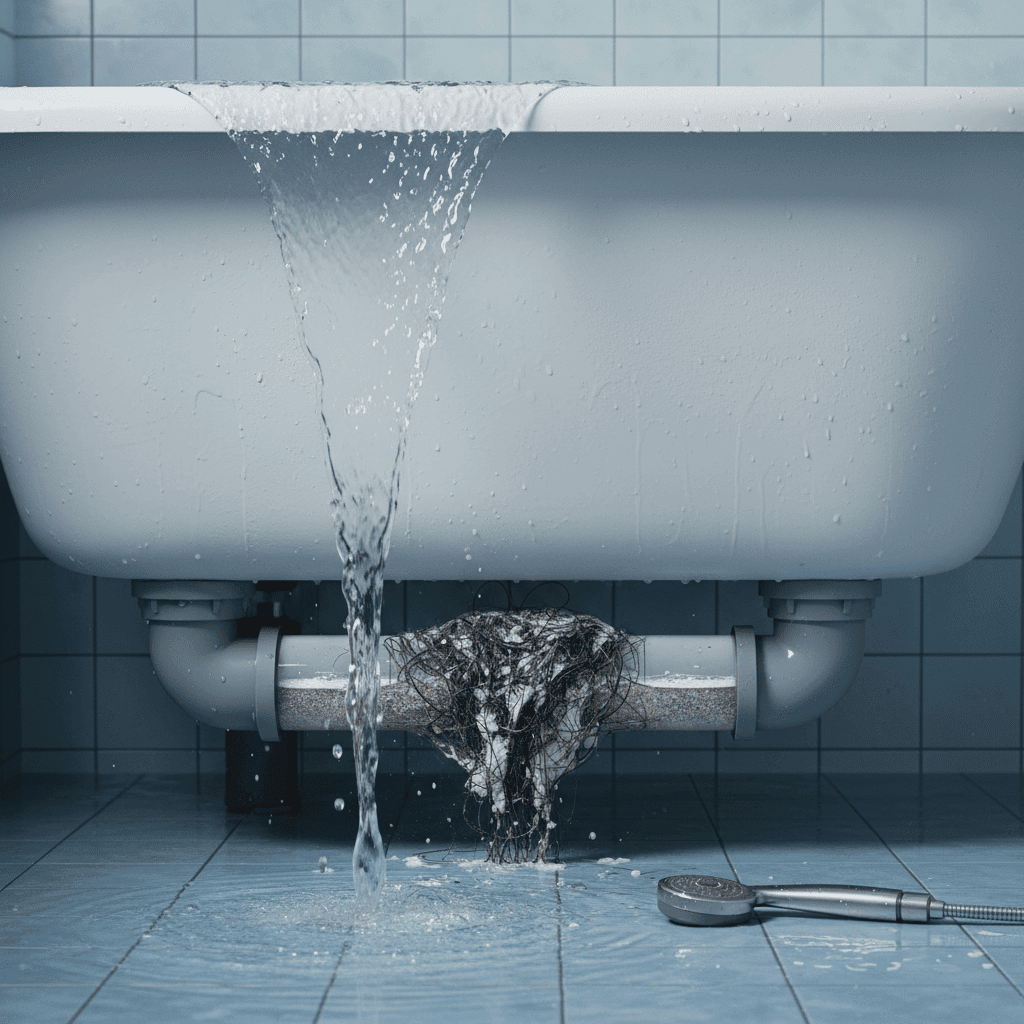
- Hair accumulation Hair is the single most frequent culprit. Strands knot and cling to soap scum and minerals, forming dense plugs that slow water flow.
- Soap scum and minerals Over time soap residue and hard water minerals coat the pipe walls. This narrows the passage and combines with hair to create stubborn clogs.
- Foreign objects Small toys, razors, jewelry and other items can drop down the drain and jam the trap or deeper pipes.
- P-trap or vent problems The P-trap can hold trapped debris, and a blocked vent can prevent air flow needed for smooth drainage leading to slow drainage or gurgling.
- Tree roots and older pipes In older homes clogged main lines or root invasion can cause backups that start in the bathtub but affect multiple drains.
How hair and soap scum create a bathtub backup
Most bathtub backups begin with hair collecting near the stopper or drain grate. Hair forms a net that catches soap particles and mineral deposits. Once that mesh is thick enough water slows and debris builds behind it.
Example scenario: a household with long hair may see gradual slowing over weeks until a weekend shower leaves the tub full. Repeated small clogs compound so what starts as a slow drain becomes a full backup.
Small habits that cause big problems
Not rinsing the tub after shaving, tossing cotton pads down the drain, or using bar soap that leaves heavy residue will speed up buildup. A quick rinse after each use reduces residue accumulation and lengthens the interval between deep cleans.
Signs the clog is local versus a main line issue
Quickly spotting whether a problem is isolated to the bathtub or part of a wider system problem saves time and may prevent unnecessary repairs.
- If only the bathtub is slow the clog is likely near the drain or P-trap
- If multiple fixtures are slow or toilets back up when the tub fills there may be a main sewer line problem
- Gurgling noises after water drains can indicate venting issues or partial blockages deeper in the system
When you see multiple fixtures affected, stop using water and contact a professional to prevent sewage backup into your home.
DIY methods to clear a bathtub drain
Several safe methods often clear a blockage without harsh chemicals. Start with the least invasive option and move to more advanced steps if needed.
Simple tools and steps
- Manual removal Remove the drain cover and use a flashlight and a pair of needle nose pliers or a drain pick to pull out visible hair and debris.
- Plunger Use a cup plunger designed for sinks and tubs. Fill the tub slightly to cover the plunger rim, create a tight seal, and pump vigorously for 20 to 30 seconds.
- Plumbing snake A handheld auger reaches further down the line. Feed it slowly until you feel resistance, then rotate and pull back to extract the clog.
Safe cleaning mixtures
A mix of hot water and a biodegradable mild cleanser can help dissolve soap scum. For tougher buildup, pour hot water down the drain, wait, then plunge. Avoid pouring strong chemical cleaners repeatedly as they can damage pipes and harm finishes.
When to try advanced steps and when to stop
If manual pulling and a plunger do not restore normal flow, a snake may work. If a snake meets solid resistance far down the pipe or the clog returns quickly after clearing, it may be deeper in the line or the pipe may be damaged.
Signs that you should stop DIY efforts and call a technician include persistent backups, sewage smell, water rising in other drains when the tub flows, and any visible pipe damage. Pushing too hard can break older pipes or push blockages deeper.
Professional options and what to expect
If you call a licensed plumber, the technician will diagnose the blockage level. Common professional services include mechanical snaking, hydro jetting and camera inspection. A camera inspection locates the clog and checks pipe condition which helps avoid unnecessary work.
For homeowners who prefer to read reviews and confirm credentials, look for local firms with clear pricing and references. A short pre service call to describe symptoms helps the technician bring the right equipment.
For emergency or persistent problems you may search for a local solution focused on clogged bathtub drain repair to find specialists who handle both cleaning and repairs efficiently
Preventive practices to reduce future backups
Preventing clogs is easier than removing them. Adopting a few simple routines cuts the time and cost spent on future problems.
- Install a hair catcher A mesh strainer or pop up screen traps hair before it enters the drain
- Rinse after use A quick hot water rinse flushes soap residue down the line
- Regular maintenance Monthly manual checks and a quick snake pass keep accumulation from becoming a plug
- Avoid foreign items Keep small items away from the tub to lower the risk of accidental drops
Cost considerations and long term choices
Minor clogs that you handle at home cost nothing beyond tools you already own or inexpensive items. A professional snake service is usually priced per job and is a cost effective option for stubborn clogs. Hydro jetting is more expensive but removes dense buildup and can prevent reoccurrence for a longer period.
When pipes are old and frequently clog, replacing sections of the drain system can be less expensive over time than repeated service calls. Ask the technician for a condition assessment and a simple cost comparison so you have information before making upgrades.
Knowing why bathtub drains back up reduces stress and saves time. Start by identifying the likely cause and try simple removal techniques. Install preventative measures such as hair strainers and a regular rinse routine. If the clog resists DIY steps, or if multiple fixtures are affected, call a licensed plumber for a full inspection and corrective action. For localized bathtub issues you can learn more about professional clogged bathtub drain repair with qualified teams who handle both clearing and any necessary pipe work.
The path from a slow trickle to a clear flow is usually short once you know what to look for. Act early when you notice slow drainage. Small maintenance steps keep pipes functioning and cut the chance of messy backups. If you want hands on guidance or prefer to have a pro take over, reach out to a local service and describe the symptoms. A timely call prevents larger repairs and gets your bathroom back to normal fast.